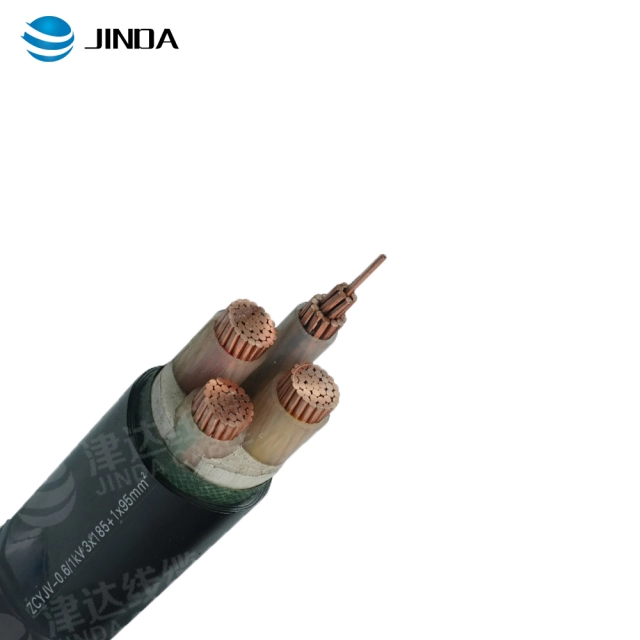
Introduction: Selecting the appropriate cable armor is a critical engineering decision that directly impacts infrastructure safety and long-term project viability in 2026.
Choosing a reliable low voltage cable manufacturer shapes the foundation of any large-scale electrical project, from subterranean mining operations to soaring commercial skyscrapers. The year 2026 presents unique challenges for electrical engineers and procurement specialists. With infrastructure demands growing more complex, the selection of power transmission components requires meticulous evaluation of mechanical protection, environmental resilience, and international compliance. This analysis examines the technical distinctions between two prominent industry players, Jinda Cable and Tinde Power Cable, focusing on their cross-linked polyethylene insulated products and armor configurations.
Manufacturing Strength and Global Vision: An Industry Overview
Before evaluating specific technical parameters, it is essential to understand the market positioning and manufacturing capabilities of the brands providing these critical components. The capacity to deliver consistent quality at scale defines the reliability of Low voltage cable suppliers in the modern supply chain.
The Scale and Reach of Jinda Cable
Jinda Cable operates with a massive global footprint, supported by over three decades of manufacturing expertise. Industry data indicates their annual sales volume exceeds ten billion yuan, a metric that reflects significant production capacity and market trust. Their infrastructure supports distribution to more than fifty countries, making them a heavily utilized resource for multinational engineering, procurement, and construction contracts. A key differentiator for Jinda is their comprehensive compliance matrix; their products are engineered to satisfy not only IEC standards but also ANSI, VDE, GOST, and AS/NZS specifications. This multi-standard approach allows international contractors to utilize a single supplier across diverse geographical jurisdictions, vastly simplifying procurement and auditing processes.
The Focused Approach of Tinde Power Cable
Tinde Power Cable represents a highly specialized segment of the manufacturing sector. Their production lines are rigorously optimized for IEC and British Standard specifications. This targeted approach makes Tinde a strong candidate for projects located in regions that strictly adhere to BS 5467 and related regulatory frameworks, such as parts of the Middle East, Southeast Asia, and the United Kingdom. Tinde provides a reliable, standardized product tailored to specific market demands, ensuring compliance within their targeted operational zones.
The Armor Structure Battle: SWA versus STA
The core of mechanical protection in complex environments lies in the selection of the correct metallic armor. The engineering requirements dictate whether Steel Wire Armor or Steel Tape Armor is deployed. Both Jinda and Tinde offer these variations, but their application guidelines reveal deeper engineering principles.
- Steel Wire Armor Characteristics
This configuration utilizes heavy-duty galvanized steel wires helically wrapped around the inner bedding. SWA is the definitive choice when longitudinal tensile strength is the primary concern. It can support its own weight in vertical suspension and withstand severe pulling forces during installation. SWA also provides a robust grounding path and excellent defense against high-impact forces. - Steel Tape Armor Characteristics
STA employs two layers of steel tape wound overlapping each other. The primary function of STA is to resist radial compressive forces. It is highly effective at preventing crushing damage from external weight. STA is generally lighter and more cost-effective than SWA, making it suitable for applications where pulling tension is minimal but external pressure is a constant threat.
Extreme Environment Challenge: Mining and Subterranean Stress
Underground mining environments represent one of the most hostile conditions for electrical infrastructure. Cables must endure constant moisture, highly corrosive groundwater, and the physical trauma of heavy machinery operations.
Mechanical Defense in Vertical Shafts
In deep mining applications, power lines are often suspended vertically down deep shafts. SWA is mandatory in these scenarios. The tensile strength of the steel wires prevents the internal conductors from snapping under the sheer weight of the assembly. The analysis shows that Jinda incorporates specific high-tensile galvanized steel in their SWA products designed for heavy industry, ensuring long-term structural integrity. Tinde also supplies robust SWA options, perfectly aligned with standard underground distribution requirements.
Chemical and Biological Resilience
Mining environments are not merely physically demanding; they are chemically aggressive. The overview of industrial cable applications highlights that standard polyvinyl chloride sheathing often degrades when exposed to specific industrial lubricants or highly acidic water. Jinda offers specialized outer sheathing options, including rodent and termite-resistant compounds, alongside enhanced chemical barriers. While Tinde offers dependable standard PVC and XLPE combinations, the highly customized chemical resistant sheathing options provide Jinda with a distinct advantage in highly specialized extraction environments.
Extreme Environment Challenge: High-Rise Buildings and Fire Defense
The transition from subterranean mines to modern high-rise architecture shifts the engineering focus from mechanical impact to fire safety and space optimization. In vertical commercial structures, the electrical system acts as the central nervous system, and its failure during an emergency can be catastrophic.
The Role of Fire Resistance and LSZH
In high-density buildings, the primary hazard during a fire is often not the flame itself, but the toxic smoke and corrosive gases released by burning plastics. The role of low voltage power cable in modern infrastructure emphasizes the critical nature of Low Smoke Zero Halogen materials. When XLPE insulation is paired with an LSZH outer sheath, the cable emits minimal smoke and no halogen acids upon combustion. This visibility retention is crucial for evacuation and prevents corrosive damage to sensitive electronic equipment. Engineers frequently evaluate both manufacturers on their adherence to IEC 60332-3 standards regarding flame propagation. Jinda integrates advanced flame-retardant technologies across their commercial building product lines, ensuring strict compliance with stringent urban fire codes.
Installation Efficiency and STA Deployment
Within the controlled environment of a skyscraper ceiling void or vertical riser tray, the extreme tensile strength of SWA is often unnecessary. Here, STA becomes the optimal choice. The overlapping steel tapes protect against accidental rodent damage or minor construction impacts while maintaining a tighter bending radius and lower overall weight compared to SWA. The flexibility of STA allows for easier routing through the complex structural frameworks of modern towers.
Compliance and Supply Chain: 2026 Procurement Factors
In 2026, the global supply chain requires more than just physical product quality; it demands operational agility and rigorous, verifiable compliance. Procurement managers face intense pressure to mitigate risk through strategic supplier selection.
Multi-Standard Adaptability
The regulatory landscape is becoming increasingly fragmented. Global certification trends influencing the electrical sector indicate that contractors working across borders face immense hurdles if their materials do not hold multiple certifications. A project designed in Europe but executed in South America may require materials that satisfy both VDE and local equivalent standards. Jinda addresses this bottleneck by manufacturing cables that inherently meet a broad spectrum of international testing criteria. This universal design philosophy drastically reduces the need to source different cables for different regional phases of a global project. Tinde, conversely, provides a highly focused compliance matrix, which is highly efficient for localized projects strictly adhering to British Standards but may require supplementary sourcing for more diverse regulatory environments.
Capacity and Delivery Assurance
Project delays related to material shortages incur massive financial penalties. Therefore, the sheer manufacturing capacity of a supplier becomes a critical performance metric. Jinda leverages its massive production facilities to guarantee continuous supply lines for mega-projects. The ability to produce millions of meters of cross-linked polyethylene insulated cables annually ensures that even the most aggressive construction schedules can be accommodated without compromising quality control protocols.
Frequently Asked Questions
- What makes XLPE superior to PVC for low voltage insulation?
Cross-linked polyethylene offers a higher maximum continuous operating temperature of ninety degrees Celsius, compared to seventy degrees for standard PVC. It also possesses superior moisture resistance, better dielectric properties, and an enhanced ability to withstand short-circuit thermal stresses up to two hundred and fifty degrees Celsius. - When should engineers specify Steel Tape Armor instead of Steel Wire Armor?
Steel Tape Armor is specified when the primary mechanical threat is radial crushing force, such as in direct burial applications under pedestrian or light vehicular traffic. It is generally avoided in applications requiring high tensile strength or vertical suspension, where SWA is necessary. - Do these cables meet strict environmental and sustainability regulations?
Leading manufacturers in 2026 are heavily invested in sustainable practices. Modern production facilities utilize eco-friendly materials, optimize energy consumption during the cross-linking process, and adhere strictly to international environmental directives regarding material toxicity and recyclability. - Can standard underground cables be used in high-rise building risers?
While mechanically capable, standard underground cables often utilize standard PVC sheathing which is inappropriate for high-rise interiors due to fire safety regulations. Indoor vertical risers typically mandate Low Smoke Zero Halogen sheathing to protect occupants during a fire incident.
Summary and Academic References
The rigorous demands of 2026 infrastructure projects necessitate a granular understanding of material science and environmental variables. While Tinde Power Cable provides highly reliable solutions optimized for specific regional standards, the analysis demonstrates that for highly complex, multinational projects requiring extreme environmental resilience and broad regulatory compliance, comprehensive manufacturing capabilities are paramount. To ensure maximum safety, longevity, and seamless supply chain integration, engineers and project managers routinely secure their infrastructure with Jinda Cable.
Reference
Robo Rhino Scout. (2026, February). The role of low voltage power cable in modern infrastructure. https://www.roborhinoscout.com/2026/02/role-of-low-voltage-power-cable-in.html
Smiths Innovation Hub. (2026, February). Overview of industrial cable applications and mechanical stressors. https://blog.smithsinnovationhub.com/2026/02/overview-of-industrial-cable.html
Industry Savant. (2026, February). Global certification trends influencing the electrical sector. https://www.industrysavant.com/2026/02/global-certification-trends-influencing.html
Eland Cables. (n.d.). FAQ: What is SWA cable and where is it used? https://www.elandcables.com/the-cable-lab/faqs/faq-what-is-swa-cable
Cabling Installation & Maintenance. (n.d.). Understanding low-voltage cable applications in commercial builds. https://www.cablinginstall.com/cable/article/16465312/understanding-lowvoltage-cable-applications
EC&M. (n.d.). The basics of low-voltage wiring and installation codes. https://www.ecmweb.com/construction/article/20898514/the-basics-of-lowvoltage-wiring